Indian businesses are handling more SKUs, faster order cycles and increasingly demanding fulfilment expectations. But when warehouse operations still depend heavily on manual processes, keeping up can become difficult. Warehouse automation helps businesses streamline repetitive tasks, improve inventory visibility and reduce operational errors using technology, software and automated equipment. For businesses looking to modernise their operations, Warehouse Easy combines technology-led warehouse management with scan-based operations, real-time inventory visibility and SKU-level traceability. Explore Warehouse Easy to see how a smarter warehouse setup can help your business scale with greater control and accuracy.
What Is Warehouse Automation?
Warehouse automation refers to the use of technology, software and equipment to automate or streamline warehouse processes such as receiving, put-away, storage, picking, sorting, packing and dispatch.
Automation does not necessarily mean replacing people with machines. Instead, it reduces repetitive manual work and helps warehouse teams make faster, more accurate decisions. Depending on the operation, this can include simple technologies such as barcode scanning and digital inventory systems or more advanced solutions such as autonomous mobile robots, automated storage and retrieval systems and conveyor systems.
For Indian businesses, the right approach depends on factors such as warehouse size, SKU count, order volume, product characteristics and the level of inventory control required.
How Do Automated Warehouse Systems Work?
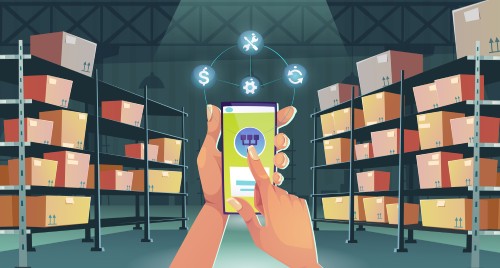
Automated warehouse systems bring together software, data and physical processes to create a more connected flow of goods and information.
A Warehouse Management System (WMS), for example, can track inventory, manage warehouse tasks and provide visibility into stock movements. When integrated with scanning technology or material handling equipment, the system can capture inventory activity as it happens rather than relying entirely on manual updates.
Consider a simple order fulfilment process. An order is received, the required SKU is identified, a picking task is generated, the item is scanned and the inventory record is updated. Each step creates a digital trail, making it easier to identify discrepancies and understand where inventory is within the warehouse.
This is one area where Warehouse Easy’s technology-led approach can add value, particularly for businesses that need better visibility across inventory and fulfillment operations.
Key Warehouse Automation Technologies
Warehouse automation is not one technology. It is an ecosystem of tools that can be combined according to operational requirements.
Barcode and RFID Technology
Barcode scanning allows warehouse teams to identify products and record inventory movements during receiving, picking and dispatch. RFID can also be used to identify and track inventory with minimal manual intervention.
Scan-based processes are particularly useful when businesses need better SKU-level traceability and inventory accuracy.
Automated Material Handling
Automated material handling refers to equipment used to move, store, sort or retrieve goods with reduced manual intervention.
Examples include:
● Conveyors
● Automated storage and retrieval systems
● Automated guided vehicles (AGVs)
● Autonomous mobile robots (AMRs)
● Automated sorting systems
● Pick-to-light and put-to-light systems
Not every warehouse needs all of these technologies. Automation should be selected according to the movement patterns, product types and volumes within the facility.
Warehouse Management Software
Software provides the intelligence behind many automated operations. A WMS can manage inventory, locations, picking tasks, receiving and dispatch while providing a central view of warehouse activity.
For businesses working with a technology-enabled 3PL partner such as Warehouse Easy, WMS integration, API connectivity and real-time inventory visibility can help connect warehouse activity with wider business operations.
What Are the Benefits of Warehouse Automation?
The biggest benefit is greater operational control. When inventory movements and warehouse processes are captured digitally, businesses can reduce their dependence on manual records and improve decision-making.
Key benefits include:
● Better inventory accuracy
● Faster picking and fulfilment
● Reduced manual errors
● Improved SKU traceability
● Real-time inventory visibility
● Better utilisation of warehouse resources
● Greater operational consistency
● Easier scalability during demand peaks
For growing Indian businesses, this can be particularly valuable during festive sales, promotional periods and sudden increases in order volumes.
Does Every Business Need a Fully Automated Warehouse?
No. Automation does not have to mean transforming an entire warehouse overnight.
Businesses can start with processes where automation can deliver the clearest operational benefit. This could mean barcode-based inventory tracking, WMS integration, digital order processing or automated material movement.
The objective should be to identify where manual processes create delays, errors or visibility gaps and introduce the right technology there.
This is also why Warehouse Easy focuses on practical technology-enabled warehousing rather than automation for its own sake. Its scan-based operations, inventory visibility and SKU traceability are designed to give businesses greater control over day-to-day warehouse operations.
The Future of Warehouse Automation in India
Indian warehousing is moving towards more connected, data-driven operations. WMS platforms, APIs, scanning systems, robotics and real-time data are increasingly working together rather than functioning as isolated tools.
The next stage of warehouse automation technology will be less about simply moving goods faster and more about creating warehouses that can respond intelligently to inventory levels, order demand and operational data.
For businesses, the question is therefore not simply whether to automate. It is which processes to automate, when to do it and how to build an operation that can scale with the business.
Frequently Asked Questions
What is warehouse automation?
Warehouse automation is the use of technology, software and equipment to automate or streamline warehouse activities such as receiving, storage, picking, sorting, packing and dispatch.
What are examples of warehouse automation?
Examples include barcode scanning, WMS platforms, conveyors, automated storage and retrieval systems, AGVs, AMRs and automated sorting systems.
What are automated warehouse systems?
Automated warehouse systems combine software, equipment and data to streamline warehouse processes and reduce manual intervention.
Can small and medium-sized businesses use warehouse automation?
Yes. Businesses can begin with targeted solutions such as barcode scanning, digital inventory management and WMS integration instead of automating the entire warehouse.
How does warehouse automation improve inventory accuracy?
Digital scanning and integrated warehouse systems create a record of inventory movements, reducing manual data entry and making discrepancies easier to identify.